Search

How Pharmaceutical Marketing is Adapting to Changing Consumer Trends

Consumer trends are now more involved in decisions related to their care, and with shifting reimbursement and regulatory environments, pharmaceutical companies should change the way they develop, market and sell their products, according to a new report from the Health Research Institute.

While the pharmaceutical industry has historically interacted with patients through clinical trials and marketing efforts, those types of engagement may no longer be enough, the analysis found, especially as regulatory and industry changes take hold. Pharmaceutical marketing is the marketing of drugs or products to medical practitioners and consumer trends alike. What’s needed is more proactive patient engagement that meets the wants of consumers, which can increase their chances of commercial and regulatory success.

The internet is more widely used for gaining information, not for entertainment or communication. Patients now conduct online research about their problems before visiting the doctor and look up the prescribed medication after their appointment. For pharmaceutical companies, this means that the consumer is more aware than ever of the role of pharma brands in their day-to-day lives.
A connection has therefore been established, whether brands want it or not, and it’s become more and more important to build a relationship with the consumer throughout their research cycle, where they are spending the most time – online.

How to adopt this consumer-first strategy for your pharma brand.
Consumer triggers for buying medicines:
Medical advice
In the case of Rx drugs, prescriptions still drive the highest number of sales, availability of generic medicines notwithstanding. The question for pharmaceutical marketers is – how do you drive a higher number of prescriptions? And how do you ensure the consumer follows that prescription & keeps your brand in mind for next time?
Heuristic triggers
Familiar brands or medicines that have always been consumed or stored in the house, friends’ recommendations on medicines that have worked for them, or previous own experiences often affect purchases of certain medicines rather than a rational approach to evaluation.
Symptomatic triggers
With consumers being more aware than ever of their symptoms and medicines available, you have a lot of people doing the research online, then going to pharmacies and requesting OTC solutions to their problems.
Advertising
Information provided by the company, written info on the prospectus/leaflet of the product, product pricing, etc. that creates a preference for one product over another.

Want to read more such exciting articles and posts?

We will send you a monthly email with a digest of most happening news and events from the sector, straight to your inbox!

Subscribe to our newsletter

Latest Posts

FREE!

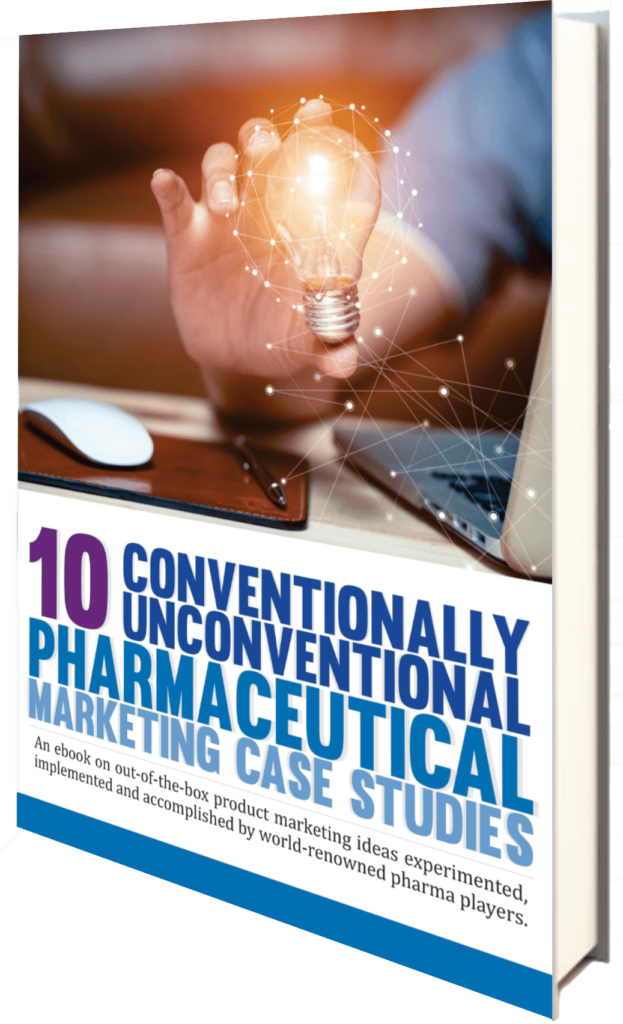
Download our free eBook on out-of-the-box Pharma product marketing ideas experimented, implemented, and accomplished by world-renowned players.

What's CME World?

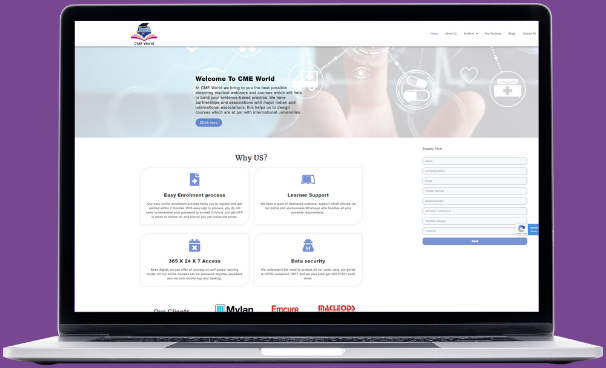
At CME World we bring to you the best possible elearning medical webinars and courses which will help to build your evidence-based practice. We have partnerships and associations with major Indian and international associations, this helps us to design courses which are at par with international universities.

More Articles

COVID-19 vaccine hesitancy
Mayur Kumar

COVID-19 vaccine hesitancy – A marketing strategy aid

COVID–19 vaccine hesitancy in the University of Notre Dame’s new test recommends that experts in unpredictable regions need to cooperate to beat the overall social crisis and that science can profit from utilizing immunization card advancements similar as their brands with clients do. “Market division procedures can be utilized to survive” COVID–19 vaccine hesitancy “and other wellbeing emergencies,” says Mitchell Olsen’s Journal of Consumer Affairs, Mitchell Olsen, speaker in publicizing at Mendoza College of Business, Notre Dame, with Matthew Meng of Utah State University. After the fundamental conveyance of COVID–19 vaccine hesitancy in mid–2021, some broad government assistance offices and officials acknowledged that by July fourth, mass opposition could be accomplished all through the US populace. Immunization rates started to decrease in pre–summer as individuals frantic to finish a neutralizer had so viably. Over 30% of grown–ups in the US are not yet completely immunized. The gathering led a public review of inoculation stocks to show how a pattern of market sharing can be productive. “Our survey found huge contrasts between four gatherings with decreased COVID–19 vaccine hesitancy in the nature and strength of the clarifications for their loathing for the immunizer and the reactions to which they are for the most part open,” said Olsen. “Now we discussed how affiliations, like the CDC, can select support trained professionals and purchaser specialists in future wellbeing crises.” In May, the gathering led a specialist review of 1,068 grown–ups in the United States.S. who were not inoculated or to some extent inoculated and viewed themselves as probably not going to be completely vaccinated. All individuals exhibited the significance of 16 clear explanations behind deciding not to be completely immunized. it trains them to be completely inoculated. Results, including portion profiles, were considered subsequent to partitioning respondents into one of four segments: unvaccinated refusals, unvaccinated reluctant, halfway refusals, or half delays. in the event that you can demonstrate that you will not or presumably not get the COVID19 immunizer or then again, if relevant, the back part. Read my more blogs from <a href=”https://www.cmeworld.org/author/mayurkumar/”>here</a>

Read More »

Stay in touch with us and grow your business!

© All Rights Reserved 2021